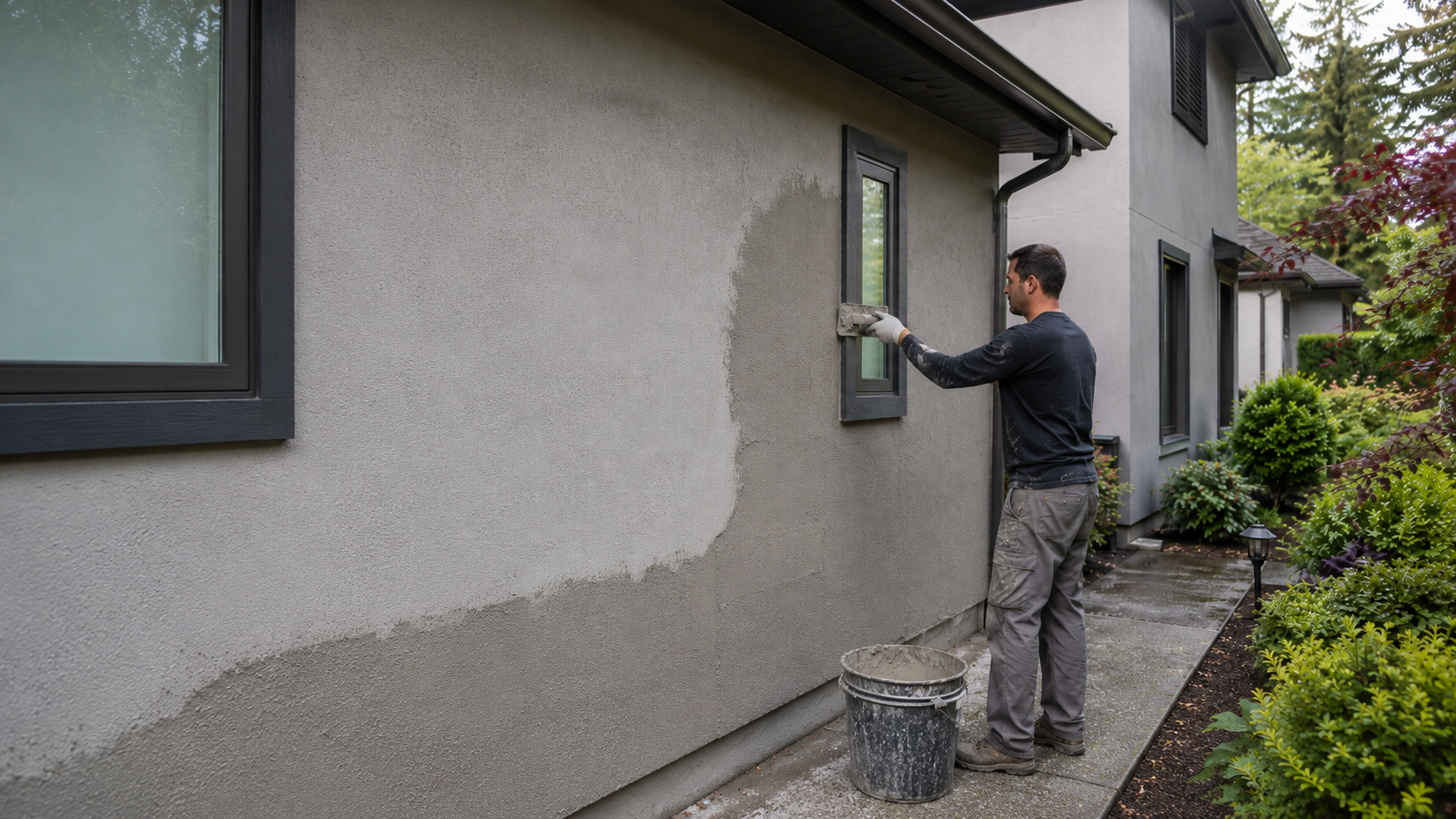

When homeowners notice water staining around a window, the first assumption is usually: “My window is bad—I need a new one.”
Sometimes that’s true. But in many Bellevue/Eastside homes, the window itself isn’t the root problem.
More often, the issue comes down to flashing, sealing, and how the window was integrated with the exterior wall system—especially on homes with stucco, EIFS, or complex trim details. If the integration is wrong, replacing the window alone can still leave the leak unresolved.
This article breaks down what’s actually happening when windows leak, how to spot the warning signs early, and what a proper fix should include.
Why Window Leaks Are Common in the Pacific Northwest
In our region, windows endure:
- heavy seasonal rain
- wind-driven water that hits openings sideways
- constant wet/dry cycles that degrade sealants
- moss/algae buildup that can trap moisture at edges
Over time, even small detailing errors can turn into recurring leaks.
The 5 Most Common Causes of “Window Leaks”
1) Failed or Missing Flashing
Flashing is the hidden water-management layer that directs water out and away from your wall system.
If flashing is missing or installed incorrectly, water can travel behind stucco/EIFS or siding and show up inside—often long after the rain stops.
Common clue: water staining at the lower corners of windows or below the sill.
2) Caulk Was Used as the Primary Waterproofing
Caulk is important—but it’s not a complete waterproofing strategy.
When installers rely on caulk instead of a properly layered flashing system, it works temporarily… until:
- caulk shrinks
- cracks form
- adhesion fails
- tiny gaps open at corners
Result: leaks return, sometimes worse than before.
3) Poor Integration With Stucco/EIFS
Stucco and EIFS require correct transitions at openings. If the wall assembly isn’t detailed to drain or shed water correctly, moisture can get trapped behind the surface.
High-risk areas:
- window corners
- trim-to-stucco joints
- weep points (where water should exit)
- foam-backed EIFS areas
4) Wrong Sill Detail (Water Has Nowhere to Go)
The sill area should be designed to direct water out, not trap it. If the sill pan detail is incorrect—or missing—water can pool at the base of the opening and soak into framing.
Common clue: staining at the bottom interior trim or bubbling paint under the window.
5) Condensation Misdiagnosed as a Leak
Not every “window leak” is rainwater intrusion. Sometimes it’s condensation from:
- poor ventilation
- high indoor humidity
- cold window surfaces in winter
Clue: moisture occurs mostly during cold weather, even when it’s not raining, and appears as fogging or droplets.
A proper inspection helps you distinguish condensation from true exterior water intrusion.
Warning Signs You Shouldn’t Ignore
Window-related moisture issues can show up in subtle ways. Watch for:
- discoloration or staining on drywall around windows
- bubbling paint or peeling texture near corners
- soft trim or swelling wood at sills
- musty smells near the window wall
- mold along baseboards under windows
- cold drafts paired with moisture symptoms
If you see more than one of these, it’s worth investigating sooner rather than later.
How Pros Diagnose the True Source of the Problem
A reliable approach looks beyond the glass and frame.
Exterior Inspection
A contractor will assess:
- sealant condition and joint gaps
- cracks in stucco/EIFS near openings
- trim integration
- flashing evidence (or lack of it)
- water paths from roof lines and gutters
Checking Surrounding Transitions
Some leaks originate above the window—then travel down behind the wall and appear at the opening. Pros look at:
- roof-to-wall intersections
- gutters/downspouts dumping water near openings
- deck-to-wall connections and railing penetrations
Targeted Opening Repair vs. Full Replacement
The inspection helps determine whether you need:
- flashing corrections and re-sealing
- stucco/EIFS repair around the opening
- trim rebuild and waterproof integration
- or truly a full window replacement