
Every spring, homeowners across Bellevue step outside and notice the same thing: cracks in their stucco. Some are hairline thin. Others are wider, deeper, and running in directions that seem a little more alarming. The natural question is whether these need immediate attention or whether they can wait.
The honest answer is that it depends entirely on the type of crack you are looking at. Not every crack in stucco signals a major problem, but some absolutely do. Knowing the difference can save you from a costly repair down the road or, just as importantly, stop you from panicking over something that is completely normal.
This guide breaks down exactly what to look for so Bellevue homeowners can make an informed decision about whether to call for stucco repair Bellevue professionals or simply monitor the crack through the season.
Why Bellevue Winters Cause Stucco to Crack
Stucco is a durable material, but it is not completely immune to the stress that comes with temperature swings. During a typical Bellevue winter, temperatures drop at night and rise during the day. This repeated cycle causes the stucco to expand and contract slightly with each temperature change.
Over time, that movement adds up. The stucco can only flex so much before it starts to show small fractures. Add in the heavy rainfall that soaks into any existing imperfections, freezes overnight, and expands as it turns to ice, and you have a very predictable recipe for post winter cracking.
This does not automatically mean your stucco is failing. It means it has been doing its job through a demanding season. The question is always about the size, shape, and location of the cracks that show up in spring.
Signs the Crack Is Cosmetic and Not a Major Concern
Hairline Cracks Across Flat Stucco Surfaces
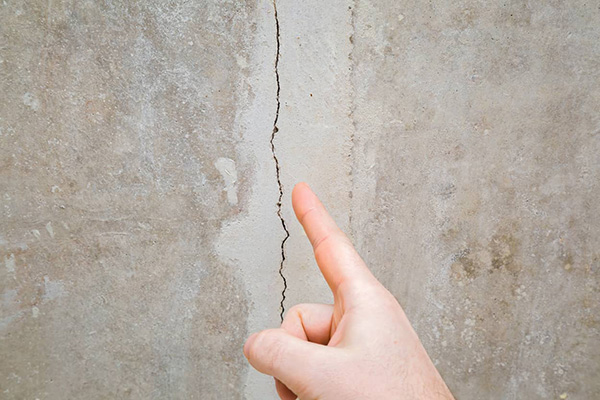
Hairline cracks are typically less than 1/16 of an inch wide and appear across flat stucco panels rather than at seams, corners, or around windows. These are almost always the result of normal thermal movement and surface shrinkage. They look alarming but rarely indicate anything serious going on beneath the surface.
If you can barely fit a credit card edge into the crack, that is a good sign you are dealing with surface level cosmetic damage that can be patched without structural concern.
Spider Web or Map Cracking
Spider web cracking, also called map cracking or crazing, spreads across a stucco surface in a pattern that looks like a road map or cracked eggshell. This type of cracking usually happens when the original stucco coat dried too quickly during installation or when older stucco has dried out significantly over the years.
While it looks dramatic, map cracking is generally a cosmetic issue rather than a structural one. A professional can seal and repaint the surface without needing to remove and replace the underlying layers.
Small Isolated Cracks with No Moisture Intrusion
If a crack is small, isolated, and dry with no signs of water staining or dark discoloration around it, it most likely has not allowed moisture to penetrate into the wall system. These cracks are good candidates for a straightforward patch and seal during a routine maintenance visit.
Warning Signs That a Stucco Crack Is a Serious Problem
Cracks Wider Than 1/4 Inch
Width is one of the clearest indicators of severity. Any crack that is wider than a quarter inch deserves a professional evaluation. Cracks this wide suggest the underlying substrate or wall framing may be shifting, settling, or experiencing stress that goes beyond normal thermal movement.
Do not fill these yourself with caulk and move on. The surface patch will not address whatever is happening behind the stucco, and the crack will almost certainly return larger the following season.
Cracks Running Diagonally from Window or Door Corners
Diagonal cracks that start at the corners of windows or doors are a red flag. These patterns typically indicate differential settlement in the foundation or framing, meaning one part of the structure is moving differently from another. This is structural movement, not surface shrinkage, and it needs a professional assessment as soon as possible.
Stucco That Sounds Hollow When Tapped
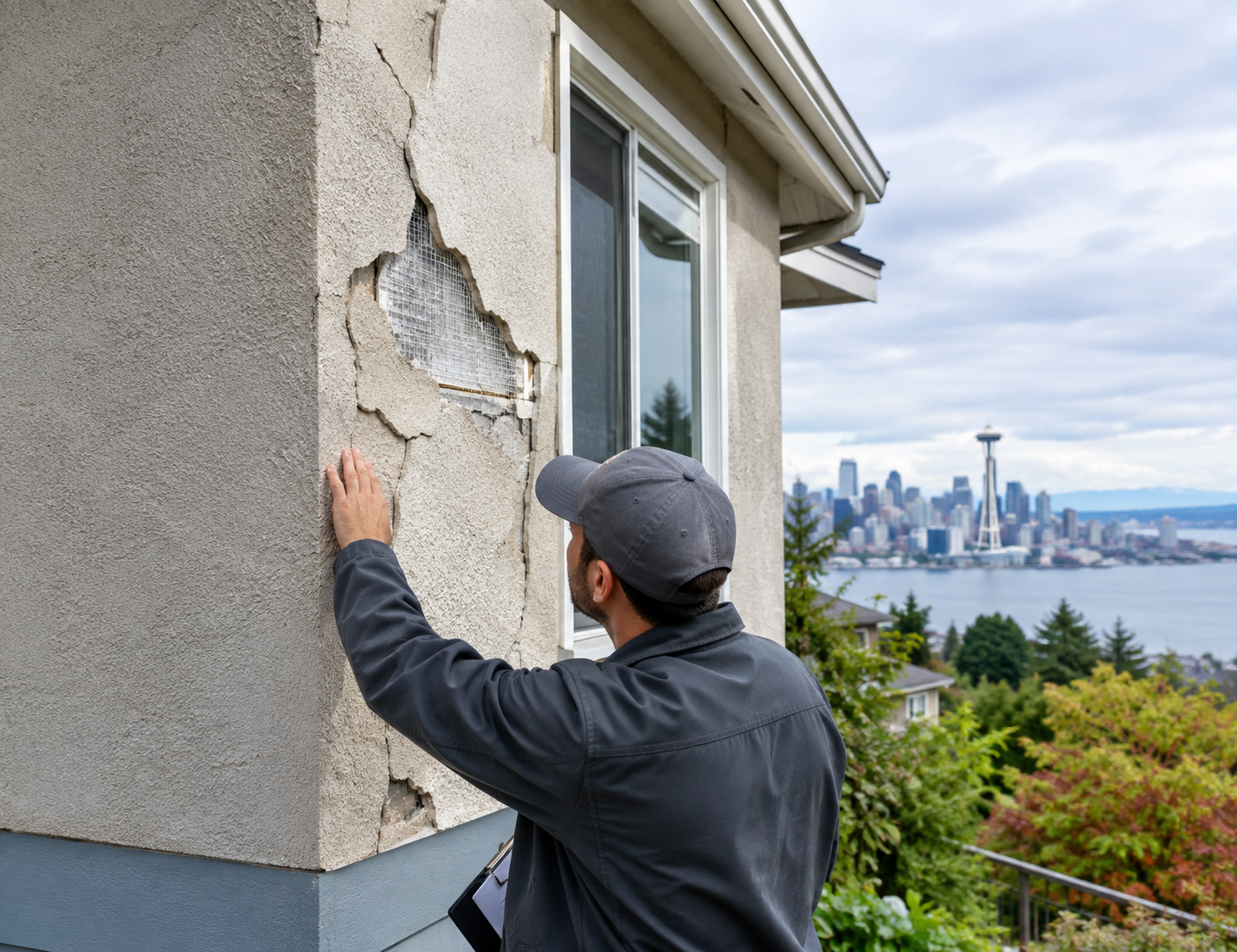
Run your knuckles lightly across the stucco near any crack. If sections sound hollow rather than solid, the stucco has delaminated from the underlying wall. Water has likely gotten behind the surface layer and broken the bond between the stucco and the substrate. This is a moisture intrusion problem that will get progressively worse if left unaddressed.
Dark Staining, Soft Spots, or Mold Around Cracks
Water staining around a crack, soft or spongy areas when you press the stucco, or any visible mold growth are all signs that moisture has been entering through the crack for some time. In the Pacific Northwest climate, water intrusion through stucco is one of the most common causes of significant structural damage in homes. Getting a professional evaluation quickly limits how far the damage has spread.
What Happens When Serious Stucco Cracks Are Left Untreated
Bellevue gets significant rainfall, especially between October and April. Any crack that allows water to pass through the stucco layer and into the wall assembly creates conditions for rot, mold, and structural deterioration. Wood framing behind stucco that stays wet will eventually soften and lose its load bearing capacity.
What starts as a repair that might cost a few hundred dollars can become a project involving wall reconstruction, mold remediation, and framing replacement if moisture damage is allowed to progress unchecked. According to the U.S. Environmental Protection Agency guide on mold and moisture, mold growth inside homes poses serious health risks including allergic reactions and respiratory irritation, and it will not stop on its own unless the underlying moisture source is fixed. Early intervention on serious stucco cracks is almost always significantly less expensive than waiting.
What Bellevue Homeowners Should Do After Winter
Do a Visual Inspection Every Spring?
Walk around the full perimeter of your home after winter ends. Look at all stucco surfaces, paying particular attention to areas around windows, doors, corners, and any location where two different materials meet. These transition zones are the most vulnerable to cracking and water infiltration.
Document what you see with photos. If you are monitoring smaller cracks from previous years, comparing photos over time tells you whether they are stable or getting larger.
Know When to Call a Professional
If you find any of the following during your inspection, contact a stucco professional before the next rainy season:
- Any crack wider than 1/4 inch
- Diagonal cracks at window or door corners
- Hollow sounding areas near cracks when tapped
- Dark water staining or visible mold near any crack
- Stucco that feels soft or separates when touched
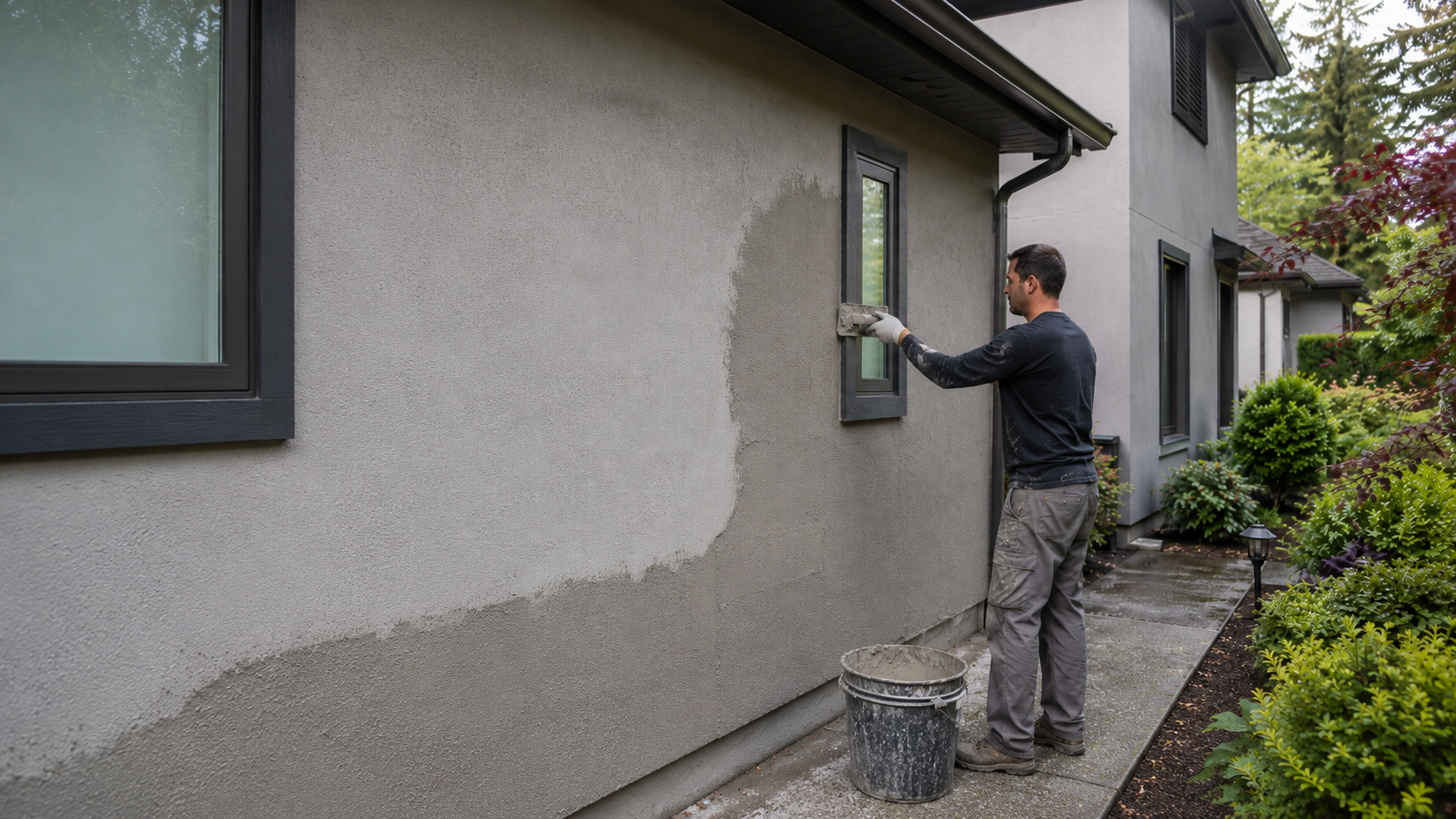
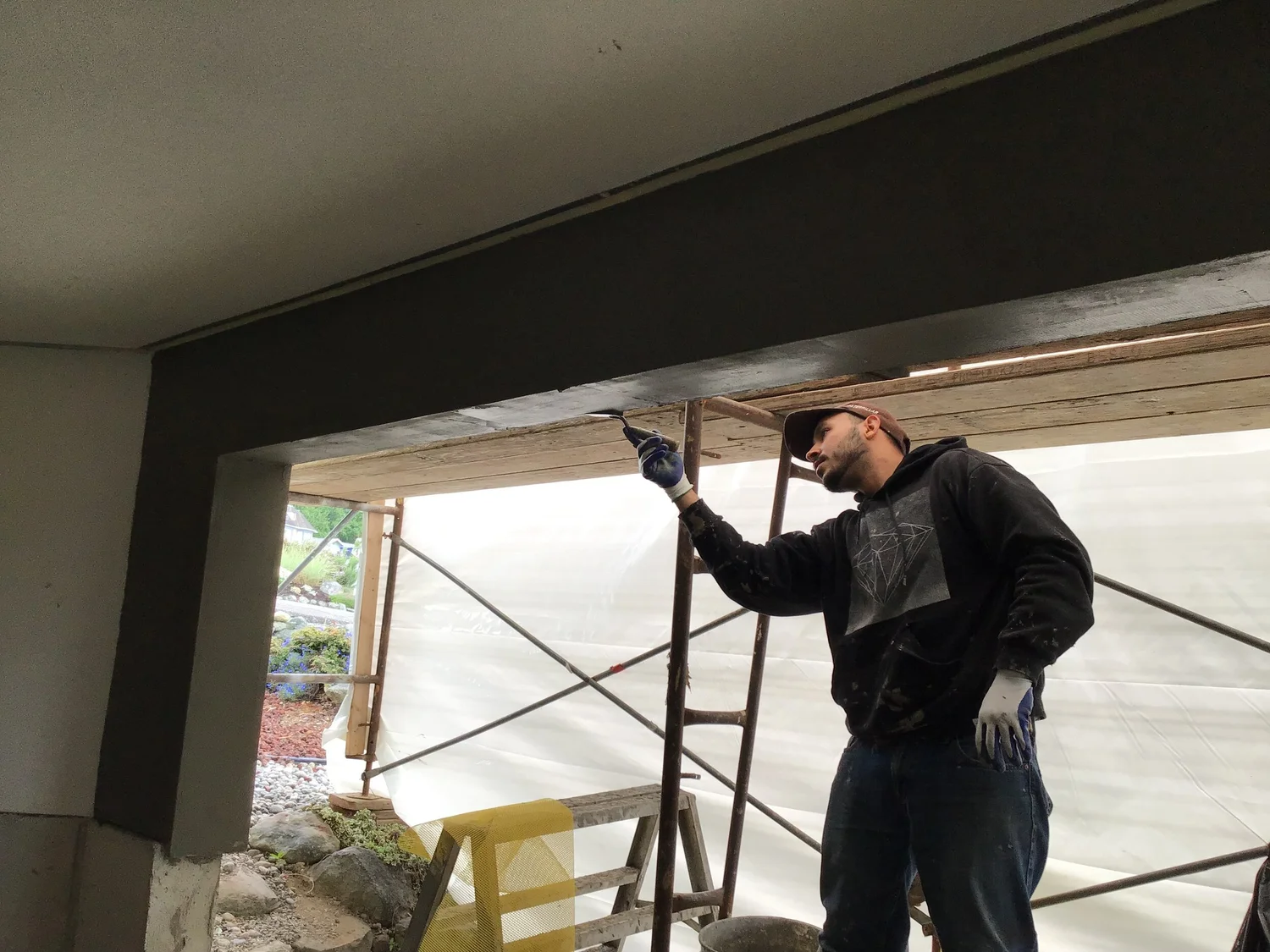
For homeowners across Bellevue and the surrounding areas, Exterior Renovation Services provides thorough stucco evaluations and repairs built for the Pacific Northwest climate. You can also read more about how EIFS vs stucco compares when deciding on repairs or full replacement.
For full-service stucco repair across Bellevue and surrounding neighborhoods, visit the stucco repair to learn more or schedule an inspection.
Frequently Asked Questions
How do I know if a stucco crack is serious or just cosmetic?
Width and location are the two biggest indicators. Hairline cracks on flat surfaces are usually cosmetic. Cracks wider than 1/4-inch, diagonal cracks near windows or doors, hollow sounding areas, and any sign of moisture or mold indicate a more serious problem that needs professional evaluation.
Why does stucco crack more after winter in Bellevue?
Bellevue winters involve repeated freeze and thaw cycles. Water that seeps into small imperfections expands when it freezes and contracts when it thaws, widening existing cracks over time. The daily temperature swings also cause stucco to expand and contract, adding to surface stress across the season.
Can I patch stucco cracks myself?
Small hairline or cosmetic cracks can be patched with a quality stucco patching compound as a temporary measure. However, cracks wider than 1/4 inch, cracks near structural elements, or any crack showing signs of moisture intrusion should be assessed and repaired by a professional to ensure the underlying issue is properly addressed.
What does hollow sounding stucco mean?
A hollow sound when you tap stucco means the material has delaminated from the wall behind it. This usually happens because moisture has gotten between the stucco and the substrate, breaking the bond. It needs professional repair before the delaminated section falls away or allows further water intrusion.
How much does stucco crack repair cost in Bellevue?
Costs vary depending on the size, number, and severity of the cracks. Cosmetic hairline repairs are typically affordable. Repairs involving moisture damage, delamination, or structural cracking require more extensive work and cost more. Getting a professional assessment gives you a clear picture of what your specific situation involves.
How often should I inspect my stucco in the Pacific Northwest?
At minimum, do a full visual inspection every spring after winter ends. This is when crack damage from the season is most visible and easiest to address before the next round of rain arrives. If your home is older or has had stucco issues in the past, a professional inspection every two to three years is a wise investment.
Does homeowner’s insurance cover stucco crack repairs in Washington State?
Coverage depends on the cause of the damage. Sudden damage from an event like a storm may be covered. Gradual deterioration from moisture or age typically is not. Review your policy carefully and document any damage thoroughly before filing a claim. A professional repair company can help you understand what the damage involves and provide documentation if needed.