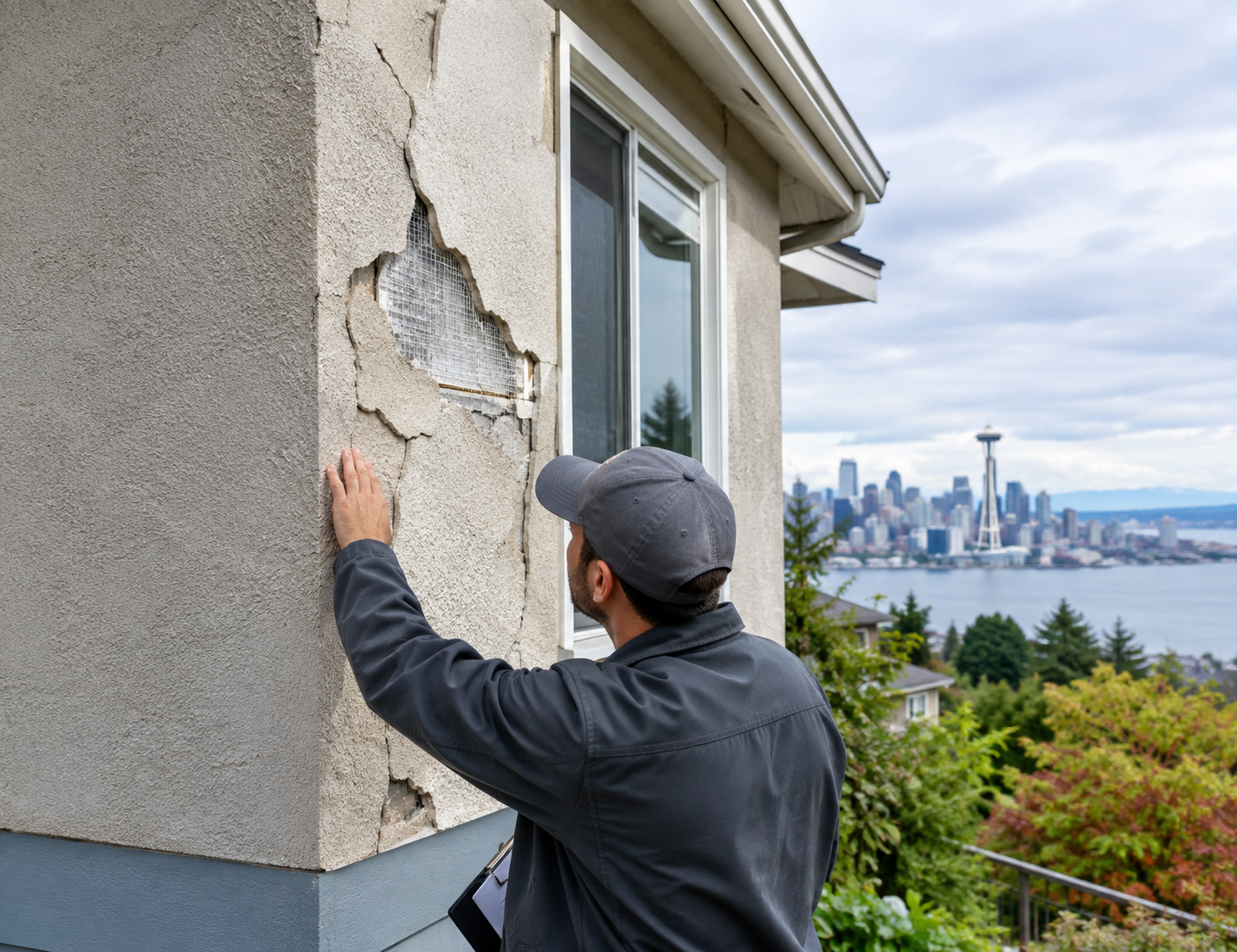

A crack in exterior plaster does not automatically mean the whole wall needs to come off. It also does not mean a quick patch will provide a lasting repair. Plaster cracks in Bellevue homes can range from minor surface damage to evidence of moisture, movement, or loss of bond behind the finish.
Understanding the difference matters. A well planned local repair can preserve sound material and control costs, while repeated patching over a larger failure can waste money and allow hidden damage to continue. The right decision depends on the crack pattern, the condition of the surrounding plaster, and what is happening beneath the surface.
This guide explains how to read common crack patterns, when a contained repair may be enough, when a larger wall section may need to be replastered, and why moisture must be addressed before new material is applied.
Why Plaster Cracks Develop on Bellevue Homes
Many older homes in Bellevue and across the Eastside were finished with traditional cement or lime based exterior plaster. Historically, the terms plaster and stucco have often been used for closely related exterior wall finishes, although the exact materials and construction methods can vary from one property to another.
Bellevue exteriors are exposed to long wet seasons, wind driven rain, repeated wet and dry cycles, occasional freezing conditions, and seasonal temperature changes. Over time, that exposure can place stress on a rigid plaster finish, particularly when water reaches a weak joint or when the wall system cannot drain properly.
Normal building movement, settlement, prior repairs made with incompatible materials, corrosion in metal lath, and simple age can also contribute to cracking. None of these causes should be diagnosed from appearance alone. Plaster cracks in Bellevue homes need to be evaluated in the context of the wall, nearby windows and doors, and any visible moisture symptoms.
Hairline Cracks, Wider Cracks, and Loss of Bond
Not every crack means the same thing. Its width is important, but location, direction, depth, and nearby symptoms often provide more useful information.
Hairline Surface Cracks
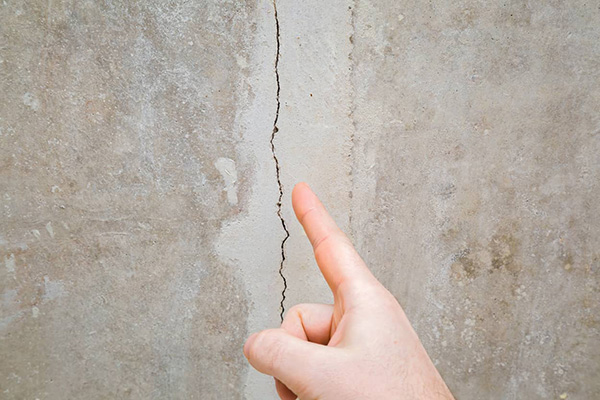
Thin, stable cracks limited to the finish coat are often cosmetic. They may result from minor shrinkage, normal movement, or aging of the outer surface. If the surrounding plaster remains firmly bonded and dry, a localized repair may be sufficient.
Wider or Repeated Cracks
A crack that is widening, returning after repair, or running diagonally or in a stepped pattern deserves closer attention. It may reflect movement in the backing material, stress around an opening, an incompatible previous patch, or moisture affecting the substrate.
Bulging or Hollow Areas
If the surface bulges outward or produces a hollow sound when gently tapped, the plaster may have lost its bond to the lath or substrate. This is no longer only a surface crack. Loose material usually needs to be removed back to a firmly attached edge before a durable repair can be made.
When Moisture Is Trapped Behind the Plaster
Some of the most serious plaster problems are difficult to see from the outside. Water can enter through a crack, failed sealant joint, poorly detailed window opening, roof to wall transition, or damaged flashing. It may then travel behind the finish and remain against sheathing, framing, insulation, or lath.
The EPA moisture guide explains that hidden moisture and mold may be found behind wall materials and that correcting the water source is essential. Although the guide focuses primarily on interior moisture and mold control, the same basic principle applies to an exterior wall assembly: a visible surface repair will not solve a leak that remains active behind the plaster.
Staining, bubbling paint, soft trim, a musty smell near an exterior wall, rust marks, or recurring cracks around a window should not be dismissed because the visible opening looks small. These symptoms can indicate that the affected area needs moisture testing or a controlled opening so the concealed materials can be inspected.
When a Local Plaster Repair Is Enough
Many plaster cracks in Bellevue homes can be repaired without removing an entire wall section. A contained repair is generally more reasonable when:
- The cracking is limited to a small, clearly defined area
- The surrounding plaster remains firmly bonded
- There is no bulging, widespread hollow sound, or loose material
- The substrate is dry and structurally sound
- The source of any previous moisture has been identified and corrected
- A compatible repair material can be matched to the existing plaster
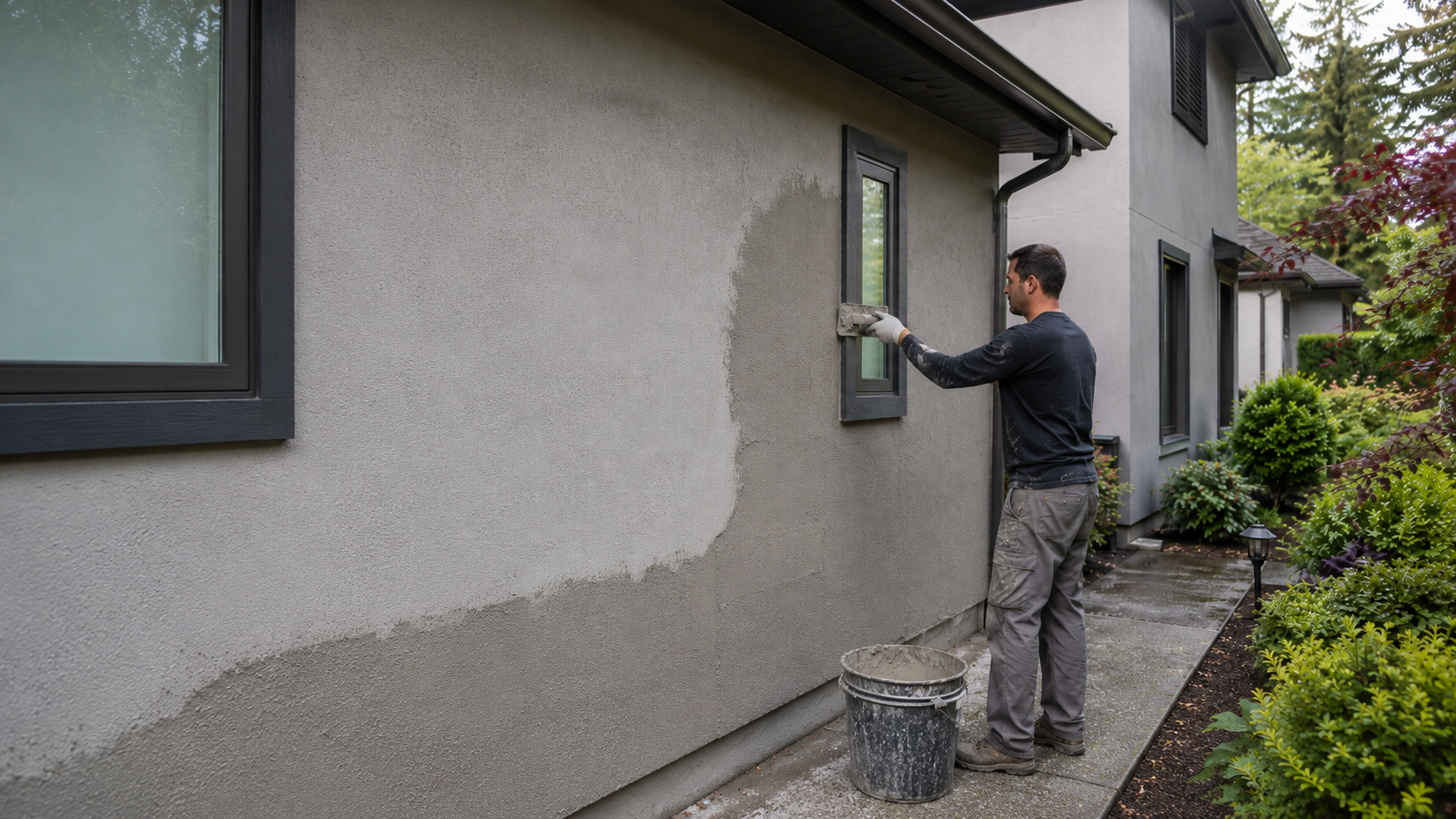
A lasting patch involves more than covering the visible line. Loose edges must be removed, the repair area must be cleaned and prepared, and the new plaster must be compatible with the original material. The coat thickness and texture should also be matched so the completed area blends with the surrounding wall.
When Replastering a Larger Wall Section Makes Sense
Replastering becomes the more practical option when damage is widespread, the plaster has lost its bond across multiple areas, or numerous small patches would be difficult to blend into the existing finish. There is no universal percentage that determines when every wall must be replaced. The decision depends on the condition, texture, visibility, moisture exposure, and construction of the specific wall.
The National Park Service guidance on historic stucco repair favors retaining sound material and using localized patches when possible. It also explains that replastering an entire wall section may be preferable in some highly visible areas or when scattered repairs on a smooth finish would be difficult to conceal.
Other conditions that may support replastering include cracking across several parts of one elevation, repeated failures in the same locations, extensive delamination, deteriorated lath, corrosion, or sheathing damaged by long term moisture. Any compromised backing must be repaired before new plaster is applied.
Why Compatible Repair Materials Matter
Older plaster can be softer and more flexible than modern mixes containing a high proportion of Portland cement. Applying a very hard patch over a softer wall can create different rates of movement and may cause cracking around the repair.
A contractor should evaluate the existing finish, coat structure, texture, and base before selecting the repair mix. Matching the material is not only about appearance. Compatibility affects how the repaired area bonds, cures, handles moisture, and responds to seasonal movement.
What a Proper Plaster Repair Involves
A repair designed to last should address the wall as a system. Depending on the condition, the work may include:
- Removing loose, hollow, or severely cracked plaster back to a sound edge
- Inspecting the lath, sheathing, and visible framing for deterioration
- Correcting the water source, such as failed flashing, sealant, or drainage
- Replacing or securing damaged backing materials where necessary
- Selecting a plaster mix compatible with the existing wall
- Matching the coat thickness and surrounding texture
- Allowing appropriate curing time between coats
Skipping the inspection or moisture correction stage is one of the main reasons a crack returns. New plaster cannot compensate for movement, loose lath, or continued water intrusion behind the surface.
Plaster Repair and Stucco Repair Are Related but Not Identical
Exterior plaster and stucco are closely related terms, and they have often been used interchangeably. On an actual property, however, the existing mix, lath, drainage layers, finish texture, and age of the wall determine the correct repair method.
Homeowners dealing specifically with a stucco wall can review the company’s Bellevue stucco repair information for details about cracks, staining, moisture problems, texture matching, and exterior wall restoration.
Get an Honest Assessment for Your Bellevue Home
If you are looking at a crack and cannot tell whether it needs a contained patch or a larger rebuild, an onsite inspection is safer than guessing. Exterior Renovations LLC evaluates plaster cracks in Bellevue homes by checking the crack pattern, sounding the surrounding surface, looking for moisture symptoms, and assessing nearby wall transitions.
The company’s plastering services include plaster inspection, localized repair, damaged material removal, base preparation, texture matching, and larger replacement work when the wall condition requires it.
Exterior Renovations LLC has more than 20 years of experience with Bellevue area exterior systems. Visit the Exterior Renovations website to learn more about the company, or use the contact page to request a property walkthrough and free quote.
You can also review the company’s location and customer information through its Google Business Profile before scheduling your inspection.
Frequently Asked Questions
How do I know if a plaster crack is serious?
A crack may need more than a surface patch if it is widening, returning after earlier repairs, accompanied by staining, or located within a bulging or hollow area. A professional inspection can determine whether the plaster is still firmly bonded and whether moisture is present behind it.
Can plaster cracks be a sign of a hidden leak?
Yes. Water can enter through cracks, failed sealant, damaged flashing, or poorly detailed openings and travel behind the plaster. Staining, soft trim, rust marks, bubbling paint, or a musty smell near the wall should be investigated.
What is the difference between repairing and replastering?
Repairing means removing and rebuilding a limited area while preserving the surrounding sound plaster. Replastering involves replacing a larger wall section or elevation when deterioration is widespread or numerous repairs would not provide a durable or visually consistent result.
Is it more expensive to patch the same crack repeatedly?
It can be. Repeated patches may cost more over time if movement, loose backing, incompatible materials, or moisture were never corrected. Diagnosing the underlying cause before repairing the finish usually provides better long term value.
Do Bellevue weather conditions affect exterior plaster?
Yes. Long wet seasons, wind driven rain, wet and dry cycles, occasional freezing conditions, and seasonal temperature changes can stress exterior plaster. Proper flashing, sealant, drainage, and maintenance help reduce moisture related deterioration.
How can I tell whether an older patch was done correctly?
A good patch should remain firmly bonded and should match the surrounding texture as closely as practical. Cracks around the patch, visible separation, a noticeably harder material, or recurring moisture symptoms may indicate that the repair or underlying diagnosis was incomplete.